
1. Background and Context
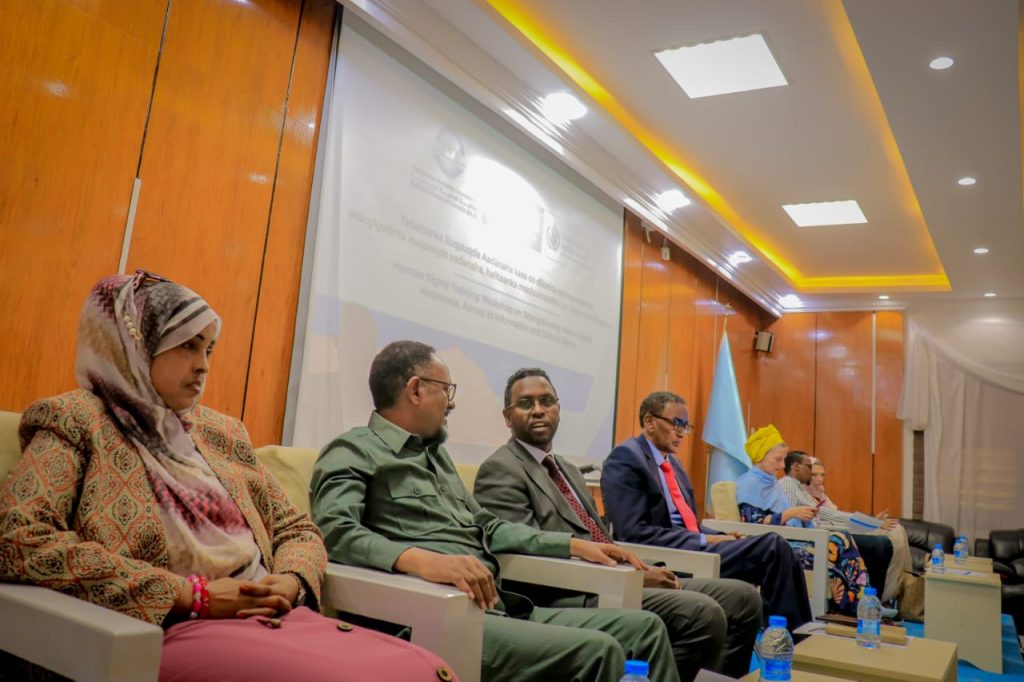
The Somali National Library (SNL) is undergoing a phased process of institutional resumption and rehabilitation following decades of limited operation. Recognizing the importance of aligning this process with international human rights standards and inclusive governance principles, a three-day training workshop was convened to integrate human rights considerations into:
- The physical rehabilitation and architectural design of the National Library;
- The development of a comprehensive National Library Act; and
- Institutional capacity-building frameworks to ensure sustainability, accessibility, and accountability.
The development of the Library Act and institutional capacity-building components are currently being primarily facilitated by the United Nations Transitional Mission in Somalia (UNTMIS), Human Rights Protection Group (HRPG), under the leadership of Ms. Kristen Young. Advocacy efforts led by HRPG have further attracted the interest of UNDP, which has initiated preliminary assessment considerations regarding potential support to the rehabilitation component.
2. Objectives
The workshop aimed to:
- Mainstream human rights principles into the resumption and rehabilitation of the Somali National Library.
- Enhance the human rights awareness, knowledge, and practical skills of Somali National Library staff and associated institutions.
- Strengthen the Library’s institutional capacity to promote cultural rights, freedom of expression, and equitable access to information in line with international human rights standards.
- Support the development of a comprehensive, rights-based National Library Act aligned with relevant international legal frameworks.
- Strengthen institutional capacity-building systems to ensure sustainability, transparency, and inclusive service delivery.
- Expand the Library’s engagement and structured collaboration with:
- National higher education library institutions;
- Public and special libraries;
- Information centers and community-based knowledge institutions;
- Informed community members, including persons with disabilities; and
- Relevant international human rights law institutions and mechanisms.
- Promote inter-institutional coordination and the development of a collaborative library network across Benadir Region and at the national level.
3. Participation
The workshop brought together representatives from:
- Staff of the Somali National Library;
- University libraries;
- Public libraries;
- Information centers and institutions operating across Benadir Region, Mogadishu.
Senior representatives participated in the opening session, including leadership from UNTMIS-HRPG, the National Council for Higher Education, the National Museum of Somalia, the National Disability Agency, the Office of the Prime Minister (Education Sector), and the Association of Somali Universities.
Participation was consistent and highly engaged throughout the three-day programme, with strong interaction during group exercises, simulations, and policy discussions.
4. Summary of Sessions
4.1 Foundations of Human Rights and Libraries as Enablers
Facilitated by Mr. Abdinasir Moallin (UNTMIS-HRPG), sessions introduced core human rights principles and explored the role of libraries as enablers of rights, including access to information, cultural participation, and freedom of expression.
4.2 Libraries as Cultural Heritage and Memory Institutions
This session emphasized the role of libraries in safeguarding national memory, preserving cultural heritage, and contributing to reconciliation and nation-building.
4.3 Public Libraries as Public Spaces
Delivered by Mr. Abdifatah Ali (UNTMIS-HRPG), this session highlighted libraries as inclusive civic spaces that foster democratic participation, dialogue, and social cohesion.
4.4 Freedom of Expression and Access to Information
Through interactive demonstrations, including picture interpretation and simulated societal group divisions, participants examined structural inequality and the importance of non-discriminatory service provision.
4.5 Protection of the Rights of Persons with Disabilities
Presented by Mr. Abdirahman Kulane (Somali Association for the Blind), this session addressed accessibility, universal design, and equal participation. Personal testimony on lived experiences of discrimination and exclusion significantly deepened participant understanding of practical inclusion requirements.
4.6 Inclusive Service Design for the Somali National Library
A key session on Inclusive Service Design was delivered by Architect Halima Abdisalan, complemented by Engineer Abdifatah.
This session focused specifically on the architectural and infrastructural dimensions of human rights implementation within the rehabilitation of the Somali National Library. Discussions addressed:
- Universal design principles;
- Physical accessibility for persons with disabilities;
- Inclusive spatial planning for elderly users and marginalized groups;
- Safe and welcoming public space design;
- Integration of community-centered service areas within the building layout.
The session underscored that rehabilitation must go beyond structural reconstruction to ensure that the building itself reflects equality, dignity, and accessibility in accordance with international standards.
4.7 IFLA–UNESCO Public Library Manifesto 2022
Presented by the Director of SNL, this session linked global library standards with Somalia’s national context and reaffirmed the library’s commitment to inclusive knowledge societies.
4.8 Human Rights Education in Public Libraries
Facilitated by UNTMIS-HRPG, this session explored how libraries can actively promote human rights education through programming, outreach, and partnerships.
4.9 Visioning Session
Participants engaged in a forward-looking dialogue: “What should our Somali National Library and future public libraries look like?” The session generated practical recommendations for inclusive, community-responsive service delivery.
5. Key Outcomes
The workshop achieved the following outcomes:
- Strengthened institutional understanding of a human rights-based approach to library rehabilitation and governance;
- Reinforced principles of equality, accessibility, and non-discrimination in both policy and infrastructure design;
- Integrated inclusive architectural considerations into rehabilitation planning;
- Advanced development of a rights-based National Library Act;
- Strengthened inter-institutional coordination among libraries and knowledge institutions in Benadir Region;
- Generated collective commitment toward collaborative network-building.
Participants expressed strong appreciation for the facilitation provided by UNTMIS-HRPG, including Mr. Abdinasir Moallin and the broader team, and requested continued capacity-building initiatives.
6. Closing Remarks and Institutional Commitments
In his closing remarks, Director General Mohamud Mohamed Siad reaffirmed the Somali National Library’s commitment to:
- Embedding human rights principles in infrastructure, legislation, and service delivery;
- Advancing a comprehensive and inclusive Library Act;
- Strengthening institutional capacity through structured partnerships;
- Establishing a coordinated and sustainable national library network.
Participating institutions expressed readiness to formalize collaboration and contribute to a shared, rights-based national library framework.
7. Conclusion
The three-day workshop successfully integrated human rights principles into the policy, institutional, and architectural dimensions of the Somali National Library’s resumption and rehabilitation.
The collaboration between the Somali National Library, UNTMIS-HRPG, architectural experts, and emerging UNDP engagement represents a constructive pathway toward sustainable, inclusive, and rights-based institutional development.
The workshop concluded with strengthened alignment among stakeholders and a shared commitment to ensuring that the Somali National Library serves as an inclusive, accessible, and democratic public institution.